Bedding guide
How to Choose an Organic Wool Mattress Pad for Breathable Comfort
A mattress pad can change the feel of a bed in a surprisingly practical way. Wool is prized for its ability to absorb moisture and help moderate temperature, but the word “wool” alone tells you little about how a pad will fit, feel, or fare in the wash. Compare its filling, cover, construction, attachment, and care requirements before bringing one home.
Published October 9, 2026
At night, a bed becomes a small climate. Warmth gathers beneath blankets; moisture leaves the body and meets the sheets; a sleeper shifts between cool edges and warmer hollows. The layers nearest the body help shape that environment. A wool mattress pad sits between the mattress and fitted sheet, adding a modest cushion while influencing how moisture and heat move through the bedding.
Wool has a long history in textiles, from blankets and clothing to bedding. Its fibers can absorb water vapor while still feeling relatively dry to the touch, and the structure of the fiber helps trap air. These qualities make wool a popular choice for people looking for breathable, natural bedding. They do not, however, guarantee that every wool pad will feel cool, resist spills, or suit every sleeper. Construction matters as much as the material name.
Choosing well means looking past a label and asking practical questions: What is the wool like? What fabric surrounds it? How is the pad held in place? How deep is your mattress? And what does “care” really mean for this particular design? The answers help distinguish a pad that fits your routine from one that is beautiful in theory but inconvenient in use.
First, understand what a mattress pad does
A mattress pad is a layer of bedding intended to add comfort, provide a degree of surface protection, or do both. It generally rests on top of the mattress and beneath the fitted sheet. Pads vary from lightly quilted textile layers to thicker, more cushioned constructions. A protector, by contrast, is usually chosen primarily as a barrier against spills, stains, allergens, or other sources of wear. Some products combine features, but a pad should not automatically be assumed to be waterproof or a complete mattress encasement.
A wool pad can soften the first impression of a firm mattress, but it is not a substitute for a mattress that provides suitable support. Its cushioning is typically a surface adjustment, not a way to correct a mattress that sags or causes persistent discomfort. If the mattress itself is worn or unsupportive, adding a pad may change the feel without addressing the underlying issue.
Before comparing materials, decide what you want the layer to accomplish. You might be seeking a little extra softness, a breathable surface, a more natural bedding arrangement, or protection from everyday moisture. These aims overlap, but no single wool design necessarily delivers all of them. For liquid protection in particular, check the product’s specifications rather than relying on wool’s moisture-managing reputation.
What wool can—and cannot—do
Wool’s appeal begins with its fiber structure. Wool can take up water vapor from the surrounding environment, which helps it manage humidity near the sleep surface. It also traps air within and between fibers, contributing to insulation. The result is a material many people find comfortable across changing temperatures. That is not the same as active cooling: a wool pad does not refrigerate a bed or guarantee that a hot sleeper will stay cool.
How a pad performs depends on more than its filling. The amount and density of wool, the weave of the cover, the bedding above it, the room’s temperature and humidity, and an individual’s sleep habits all play a part. A tightly woven, substantial pad may feel different from a lighter layer. A thick comforter can also hold warmth regardless of what lies beneath it.
Wool’s capacity to absorb moisture should not be confused with waterproofing. It may help handle ordinary humidity, but a spill can still reach the mattress unless the pad has a separately specified waterproof barrier. Likewise, dust-mite resistance or other material claims should be read as product-specific statements, not as a promise that a wool pad will prevent every allergy or eliminate the need for regular cleaning.
For many households, the useful question is not whether wool has impressive properties in isolation, but whether the particular pad’s construction matches the bedroom and its needs. Someone prioritizing an easy-to-wash layer may prefer a different design from someone willing to hand-wash a natural-fiber pad in exchange for its feel and materials.
Look closely at the fill and its sourcing
Start by finding out what the pad is filled with and how the maker describes its wool. “Wool” can refer to fibers from different sources and to a range of processing methods. Product pages may specify whether the wool is natural, washed, treated, blended, or sourced from organically raised animals. Read the exact wording: these descriptions are not interchangeable, and a claim about animal sourcing does not automatically establish that every component of the finished pad is certified organic.
If organic status is important to you, look for clear information about which material is certified and by whom. A pad might use wool described as organic while its cover, thread, elastic, or other components are made from different materials. Ask whether certification applies to the wool, the textile, or the complete product. When details are unclear, a manufacturer’s material documentation is more useful than a broad “natural” label.
Fill quantity and construction influence loft and feel. More filling may produce a cushier surface, but thickness alone does not tell you whether it will remain evenly distributed or how it will fit beneath sheets. A dense woven wool surface may feel more blanket-like than a lofty quilted pad. Consider whether you want a barely noticeable layer or a more substantial change to the bed’s hand-feel.
People sensitive to animal fibers should also consider direct contact. In most setups, the pad is covered by a fitted sheet, but the textile still contributes to the bed’s overall warmth and feel. If you have a known wool sensitivity, consult a qualified health professional and review the product’s material details before making a change.
The cover is part of the sleep surface
The fabric surrounding the wool affects breathability, softness, durability, and cleaning. Cotton is a common cover material; its weave and weight can make one pad feel crisp and another soft or substantial. A smooth cotton cover may suit people who want a familiar textile against their sheet, while a denser weave may help contain loose fibers. Check whether the cover is fully described, not just the filling.
Pay attention to the full material list. A product described as natural may still include elastic, bindings, ties, or synthetic components. Those additions are not automatically a drawback: elastic can help a pad stay put, and different materials can serve practical purposes. The key is to know what you are buying, especially if you have particular preferences about fiber content or want to avoid certain materials.
Construction details can tell you how the fill is contained. Quilting, woven panels, or other internal structures may limit shifting, while simpler designs can behave differently. Look for information about how the pad is assembled and whether the maker recommends any adjustment or reshaping over time. A close inspection of seams and edges can also help you judge whether the design is likely to tolerate routine use.
Measure the mattress before choosing a fit
A comfortable pad is only useful if it stays in place. Measure the mattress, including any topper that will remain underneath the pad. Then check the product’s stated maximum mattress depth and the method used to secure it. A pad with shallow corner straps may not behave like a fitted design with deep elasticized sides, even if both are listed in the same size.
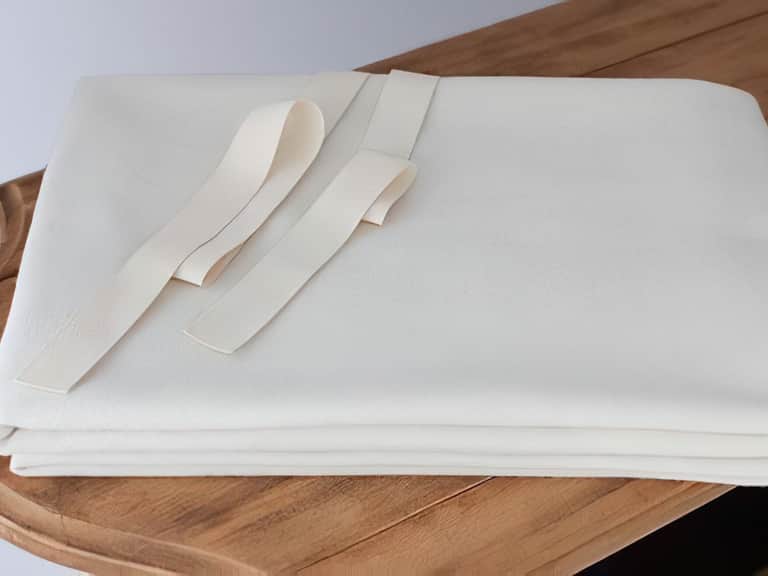
Some wool pads use corner ties or straps rather than a pocket that encloses the mattress. This can make them adaptable to a range of depths, but the corners still need to reach comfortably without pulling. Other designs use elasticized skirts. Compare the pad’s sizing instructions with the actual mattress dimensions, accounting for added height from a topper and for a mattress that has a pillow-top or unusually rounded edges.
Do not assume that a standard size will fit every mattress of that label. Mattress dimensions and profiles can vary, and a pad that is too small may pull at the corners or bunch in the center. One that is too large can wrinkle beneath the sheet. If a mattress is especially deep or has an adjustable base, contact the maker to confirm that the attachment system suits that configuration.
As one example of a strap-based option, the Savvy Rest Wool Mattress Pad is described as having removable organic cotton corner ties and fitting mattresses up to 14 inches deep. Its listed care is hand-washing in mild detergent and line drying. Those details are useful comparison points, but they should be checked against your mattress depth and laundry routine before choosing it.
Care instructions are part of the decision
Washability can be the difference between a suitable wool pad and an impractical one. Some bedding is machine washable; some must be hand-washed or professionally cleaned; some should not be immersed in water. Wool can change shape or texture if handled in ways that the maker does not recommend, so never assume that a natural fiber is automatically easy to launder.
Read the care label before purchase, not after a spill. Check whether the pad can be washed as a whole, which detergent is appropriate, whether soaking is allowed, and how it should dry. Line drying may take time and require enough space. A large pad can also be heavy when wet. If you rely on frequent machine washing, prioritize a design whose instructions realistically fit your household’s equipment and habits.
For routine freshness, follow the manufacturer’s guidance. Airing bedding in a well-ventilated space may help it release moisture, but sun exposure and heat can affect some textiles, so check care directions first. Use a fitted sheet as a washable layer above the pad, and respond to spills promptly according to the product instructions. Avoid bleach, high heat, or aggressive agitation unless the label explicitly permits them.
A washable mattress protector can be used alongside a wool pad when greater spill protection is needed, but layer order and material compatibility matter. A waterproof layer may change airflow or the feel of the bed. Follow the manufacturers’ directions and consider which layer should sit closest to the mattress. If the mattress has its own care or warranty requirements, review those as well.
Match the pad to your sleep preferences
Temperature is personal. If you tend to wake feeling warm or damp, wool’s moisture-managing characteristics may be appealing, but the full bedding system deserves attention. Heavy blankets, tightly woven sheets, room temperature, pajamas, and ventilation can all influence the way a bed feels. Changing one layer at a time makes it easier to tell what is helping.
For someone who wants a softer surface, consider how much cushioning the pad actually adds. Wool pads differ in density and thickness, and a product description may not state a precise loft. Ask about the pad’s profile if a small change in height matters to you. A pad can subtly alter surface feel, but it should not be expected to provide the deep contouring of a thick foam topper.
People who share a bed may have different temperature and firmness preferences. A single pad covers the full sleeping surface, so its feel is shared. If one partner is warm and the other cold, test other variables—such as separate blankets—before assuming a different mattress layer will solve the difference.
Finally, consider sound and movement. Natural-fiber pads are often chosen for their textile feel, but construction and how securely a pad is tied down can influence whether it shifts or rustles. Secure placement, an appropriately sized fitted sheet, and a mattress surface in good condition can all help reduce bunching during the night.
A straightforward comparison checklist
When product descriptions begin to blur together, compare each option against the same list. This keeps attention on useful details rather than broad claims.
- Fill: Identify the fiber, how it is described, and whether any organic claim is supported with specific certification information.
- Cover: Confirm the fabric and check the materials used in seams, ties, elastic, or other components.
- Construction: Look for details about quilting, fill containment, and how the pad is expected to retain its shape.
- Fit: Measure mattress length, width, and depth, including any topper; check the stated fit range and attachment method.
- Protection: Determine whether the pad offers cushioning only or has a tested waterproof barrier. Do not infer liquid protection from wool alone.
- Care: Note washing method, detergent guidance, drying requirements, and any restrictions.
- Return terms: Review the retailer’s policy, especially if you are uncertain about feel, fit, or sensitivity to the material.
- Documentation: For sustainability or sourcing claims, look for precise explanations rather than relying on labels such as “natural” by themselves.
Common assumptions worth avoiding
“Wool means waterproof.” It does not. Wool can manage moisture vapor, but a spill may pass through unless the product specifically includes a waterproof layer.
“Organic describes every part.” Not necessarily. Check which materials and components are covered by a certification or sourcing statement.
“Breathable means cool in every bedroom.” Breathability may contribute to comfort, but room conditions and the rest of the bedding matter. No material can guarantee a particular temperature for every sleeper.
“Natural fibers need no special care.” Wool can require careful handling. The written care instructions are the best guide to washing and drying.
“Any corner strap will fit.” Attachment systems have limits. Confirm the maximum mattress depth and measure your bed rather than guessing from its size name.
A considered choice for a layered bed
An organic wool mattress pad may be a thoughtful addition for someone seeking a natural-fiber layer with a soft feel and moisture-managing properties. The best choice is not necessarily the thickest or the one with the longest list of claims. It is the pad whose fill, cover, fit, and care requirements make sense in your bedroom.
Begin with the need: a little cushioning, a breathable textile surface, or a layer of protection. Then verify material details and sourcing, measure mattress depth, and read the care label with the same attention you would give the product description. If you need waterproofing or machine washability, confirm those features explicitly. A short conversation with the manufacturer can resolve uncertainties about sizing, fiber content, or cleaning.
In a well-considered bedding system, each layer has a job. A wool pad can contribute comfort and help manage the small exchanges of warmth and moisture that accompany a night’s rest. Understanding what it can do—and where its limits lie—makes it easier to choose a layer that feels at home on your mattress and in your everyday routine.
Frequently asked questions
Is an organic wool mattress pad suitable for every season?
Many people use wool year-round because it can absorb moisture vapor and provide insulation. Comfort still depends on the pad’s construction, room temperature, and other bedding. A wool pad is not a guarantee against overheating.
Does a wool mattress pad protect against spills?
Not necessarily. Wool’s moisture-managing qualities are different from a waterproof barrier. Check the product specifications for an explicit waterproof layer if spill protection is a priority.
Can I put a wool pad in the washing machine?
Only if its care label says machine washing is permitted. Some wool pads require hand-washing and line drying. Follow the maker’s instructions to reduce the risk of shrinkage or damage.
How do I know whether the pad will fit a deep mattress?
Measure the mattress with any topper in place, then compare its depth with the pad’s stated maximum. Check whether it uses a fitted skirt, corner straps, or another attachment system, and contact the manufacturer if the fit is uncertain.
Does “organic wool” mean the whole pad is organic?
No. The phrase may refer to the wool alone. Review certification and material information for the cover and other components if whole-product sourcing is important to you.